Guide
Angle Ownership: How to Claim a Story Before You Start Writing
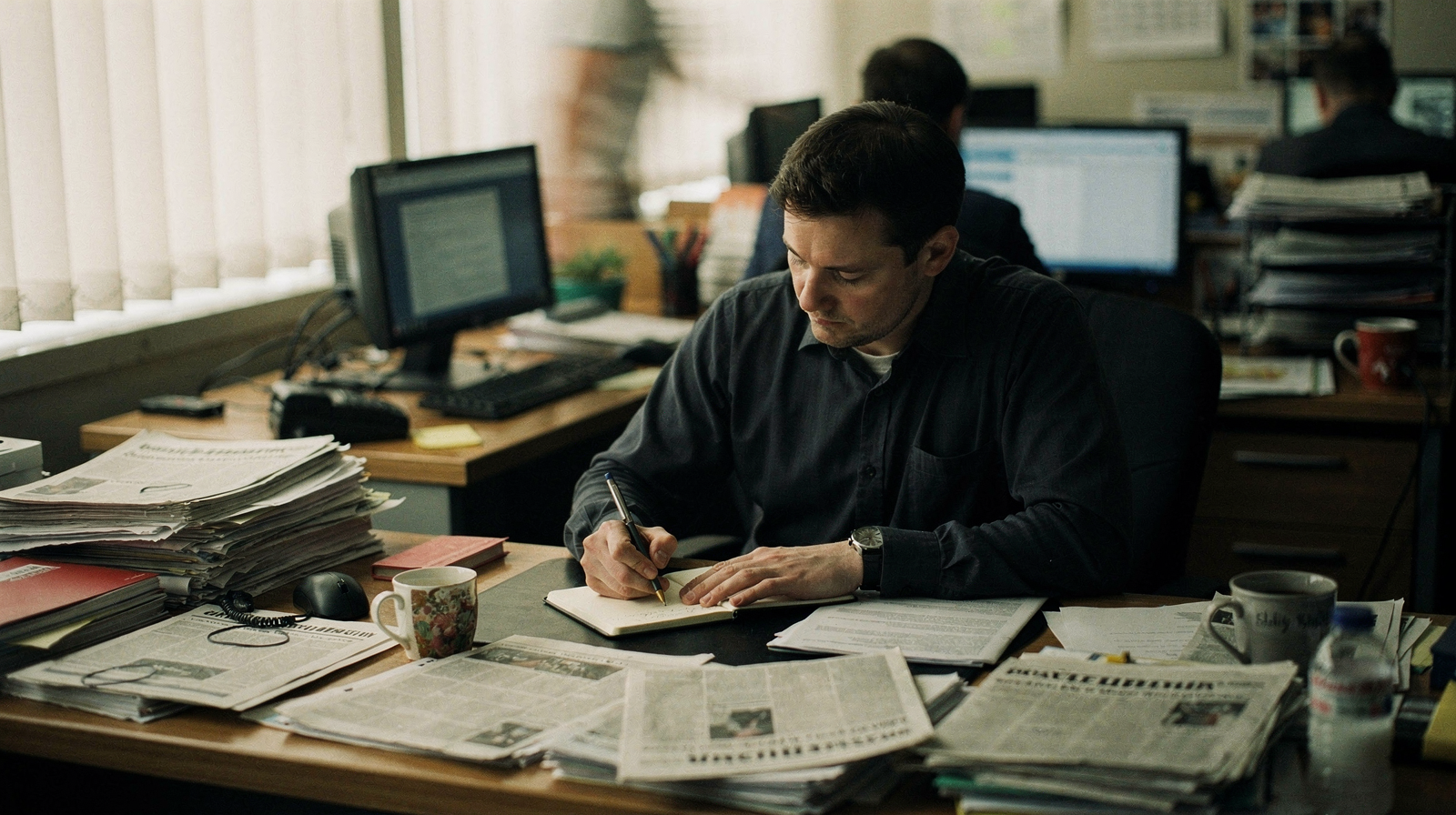
Win the crowded news week by arriving with a position, not speed.
The newsletter that wins a crowded news week isn't the fastest. It's the one that knew what it would argue before the story ever broke.
The morning forty newsletters write the same piece
On the morning a major acquisition leaks, forty newsletters in the same vertical open their drafts at once. Thirty-eight of them write the same article: here is what happened, here are three things it means, here is a cautious note about what to watch. They are competent. They are also interchangeable. The two that actually get forwarded did something the other thirty-eight could not pull off on a two-hour deadline: they already knew where they stood. One of them had argued for months that consolidation in this category was inevitable, so the leak read as evidence, not surprise. The reader who had been following that argument got the next installment of a story they were already inside. Everyone else got a summary they could have read on the wire. Same event, same hour, same facts. The difference was decided weeks earlier.
The pre-writing position
Call it the pre-writing position: the argument you have already committed to on the beats you cover, written down before any particular story breaks. Not a topic list, not a content calendar. A standing record of what you would argue if the obvious news in your vertical happened tomorrow. The publisher who wins a crowded week is rarely the one who hit publish first. It is the one who arrived with a position and used the news as proof of it. Speed is a tiebreaker between people who agree. A position is what makes you worth reading when everyone has the same facts. The reactive newsletter answers the question the news already asked. The positioned newsletter answers a question it had been asking out loud for a month, and the news just happened to settle it.
Why "your angle emerges from good research" is backwards
Creator education almost universally teaches that the angle surfaces on its own: do the reporting, sit with the material, and your unique take will reveal itself. That is fine advice for an essayist with a week. It is the wrong default for a solo publisher on a cadence. When the story breaks you do not have days to let a position emerge. You have hours, and discovery-mode research under deadline produces exactly the safe, hedged, here-are-three-takeaways piece that thirty-eight others are also producing. The angle does not fail to emerge because the writer lacks judgment. It fails to emerge because judgment under time pressure defaults to summary. Telling a deadline publisher to 'find their angle' during the write is like telling them to find their lede after they have filed. The discovery model quietly assumes a luxury of time that the cadence does not grant.
Journalism named this. Creator education didn't.
Newsrooms have a precise, mature vocabulary for the thing creator education waves at. They talk about the angle, the point of view, the lede, and the nut graf: the paragraph that states why a story matters and what the piece is arguing, not just what occurred. The load-bearing part is the workflow around those words. In a newsroom the angle is assigned before a reporter files; the pitch names the argument first and the reporting tests it. Creator how-to content, by contrast, treats 'find your angle' as a step that happens during or after writing, if it is named as a discrete step at all. That is the vocabulary gap, and it is the whole game. When two publishers cover identical news identically, it is usually because neither was ever taught to separate the event from the position on it. The trade that does this for a living moved the position upstream of the story decades ago.
Two newsletters, one earnings call
Walk it through. A mid-cap company in your vertical reports earnings on a known date. Newsletter A is reactive: it waits for the release, reads the numbers off the page, and ships a recap with three takeaways by mid-afternoon. Solid, timely, forgettable. Newsletter B is positioned: weeks earlier it had written that this company's margin story was a misdirection and that the real question was retention. It knew the earnings date was coming, drafted the hypothesis ahead of the call, and flagged the two line items that would confirm or break the thesis. When the numbers land, B is not summarizing them. It is grading its own prediction in front of a reader who has been following the argument and now wants the verdict. Same release, same data, opposite value. A delivered information the reader could get anywhere. B delivered the next chapter of something only B was writing.
What changes when the position comes first
If the pre-writing position is real, the shape of the work changes. Research stops being discovery and becomes hypothesis testing. You are no longer reading a story to figure out what you think; you are reading it to find out whether you were right. That moves the hardest, slowest cognitive work, deciding what you actually believe about your beat, off the deadline and into the quiet weeks when you have time to be honest. It also dissolves the speed race. A positioned publisher can ship slower than the pack and still win, because the reader did not come for the recap. They came to see what your standing argument does when reality tests it. The cadence stops being a treadmill of reactions and becomes a serialized case you are building, one news event at a time.
Having the signals before the story
A pre-writing position is only as good as your ability to know what is coming. You cannot stake a claim on a beat you are not watching closely enough to anticipate. That is the practical bottleneck, and it is where the upstream signal work lives. Wikipulse surfaces momentum on Wikipedia before it crests into news, which is the rawest form of pre-story signal: editors and readers move toward a topic before the headlines do. Wall Street Beat carries the earnings calendar and the SEC and contract feeds, which is pre-angle scaffolding in the most literal sense: you know the date the story will arrive, so you can stage your position before it does. None of this writes the angle for you. The judgment is still yours. But the difference between a publisher who reacts and one who arrives positioned is mostly the difference between finding out with everyone else and seeing it coming. Pre-position is infrastructure, and the infrastructure is knowing what is ahead and where you stand on it.
The cost of arriving with a view
The open question for any solo publisher is whether a standing position actually changes outcomes, or only feels more deliberate. Do positions tested in public hold readers better than week-to-week reactions? How often does a view you committed to in a quiet week turn out wrong when the story finally arrives? Being wrong in public is the price of arriving with a view, and the publishers who do it well treat a broken thesis as its own story, forwarded and revisited rather than buried. Stake the position anyway. The alternative is writing the same third paragraph as everyone else, a day late.
Frequently asked questions
How do I differentiate my newsletter when everyone covers the same story?
Stop trying to differentiate during the write. The newsletters that stand out in a crowded news week decided what they would argue before the story broke. Maintain a standing position on each beat you cover, so when news lands you are testing a thesis your reader already follows, not summarizing facts they can get anywhere.
What is an angle in writing, exactly?
An angle is the position a piece takes on an event, distinct from the event itself. Journalism formalizes it through the nut graf, the paragraph that states why a story matters and what the piece is arguing. The event is what happened; the angle is what you claim it means and why your reader should care.
Should I form an opinion before I research a topic?
Form a working position before the story breaks, then let the research test it. On a publishing cadence you rarely have time to discover a fresh angle under deadline, so discovery-mode research defaults to safe summary. Arriving with a hypothesis turns research into confirmation or correction, both of which are more interesting to read than a recap.
Isn't speed more important than position in breaking news?
Speed is a tiebreaker between people who agree. When forty publishers have the same facts in the same hour, being first by minutes wins very little. A position is what makes you worth reading at all. A positioned publisher can ship slower than the pack and still win, because the reader came for the argument, not the bulletin.
How do I know what to take a position on before the story exists?
Watch the upstream signals on your beat closely enough to anticipate what is coming. Pre-story momentum (what audiences are moving toward before it makes headlines) and scheduled events (earnings dates, filings, calendar items) tell you which stories will arrive and roughly when, which is enough lead time to stage a position before the news settles it.